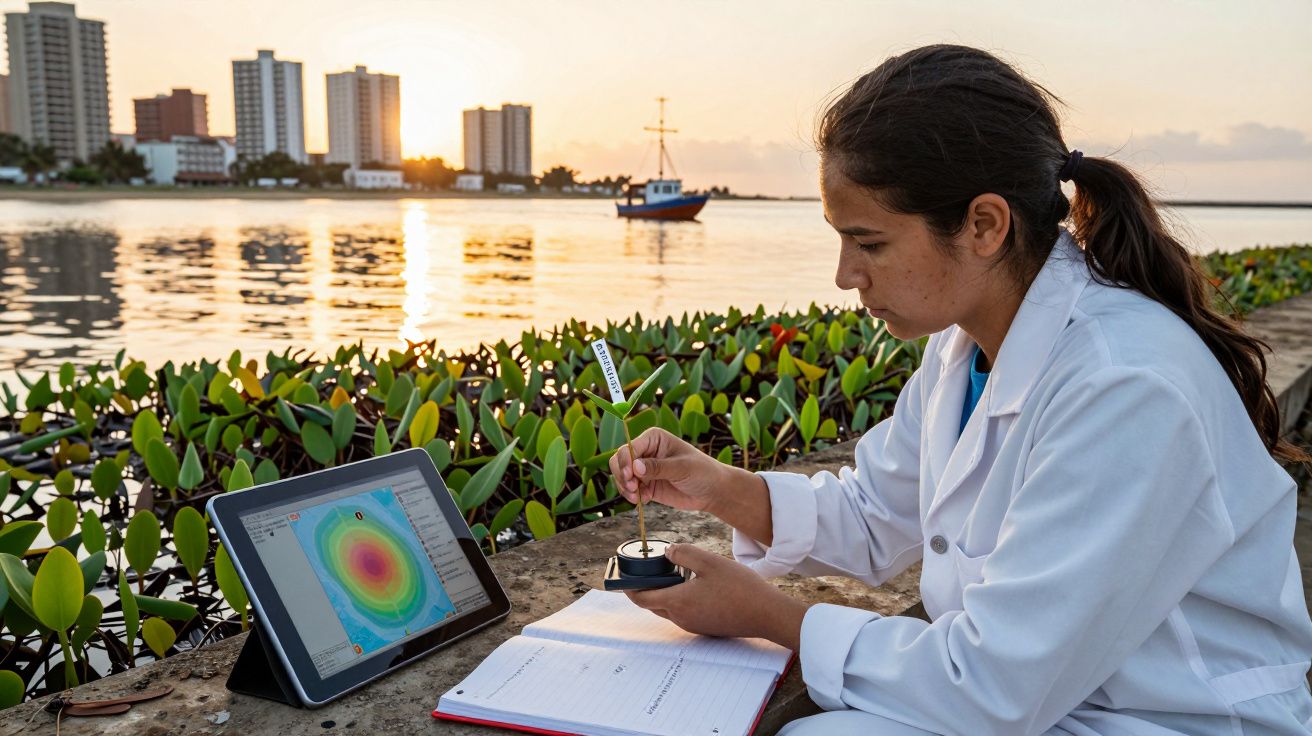
Thin pools now mirror a rising sun where tidy fields once pressed up against the water. Waders pick delicately across channels that didn’t exist ten years ago, probing for food that seems to have appeared from nowhere. A scientist in muddy waders taps coordinates into a tablet, half thrilled, half worried.
The sea is creeping in. Sea walls are quietly giving way. And yet, instead of a dead, flooded landscape, a fresh, breathing ecosystem is assembling itself at surprising speed. Crabs, algae, insects, fish nurseries, flocks of birds - all moving in like a pop‑up city.
Watching them, you get the unsettling feeling that the ground rules are changing faster than our expectations. Nature is doing something we didn’t quite plan for.
Quando a natureza passa à frente na fila
Across the planet, biologists are registering the same weird pattern: ecosystems aren’t just collapsing under pressure, they’re also reshuffling at a pace that textbooks didn’t really predict. Forests that were meant to “slowly adjust over centuries” are switching species in a couple of decades. Mangroves are marching poleward into zones that used to be ruled by grassy salt marsh.
It feels less like a slow geological film and more like watching a time‑lapse on fast‑forward. One species drops out, another moves in, fungi rewire their underground networks, and suddenly what looks like the “same” forest or reef is running on a new cast of characters. The label hasn’t changed on the map, but the system under the hood has.
This is where scientists are quietly rewriting their mental models of how fast life can pivot when the climate, soil or water chemistry shifts.
On a Caribbean reef off Belize, researchers returning after a violent bleaching event expected the usual funerary scene: ghost‑white corals, algae slime, and a long, slow slide into ruin. They found something stranger. Within just a few years, specific coral species that tolerate hotter, murkier water had colonised the shattered skeletons, using cracks and rubble like scaffolding for a starter city.
Fish that prefer complex hiding places came back. Grazing parrotfish kept the worst algae in check. The reef wasn’t “restored” to what it was in the 1980s, yet it wasn’t dead either. It had quietly reconfigured around tougher, scrappier species that could play the same basic roles - building habitat, recycling nutrients, feeding bigger predators - in a rougher world.
Similar stories pop up in abandoned European farmland turning to scrub and young forest far faster than expected, or in rivers where insect communities rebuild after dams are removed, as if the memory of a flowing system had never quite gone away.
Scientists used to describe ecosystems as if they were fragile glass domes, always on the verge of shattering. Now, more of them talk in terms of dynamic mosaics, where pieces slide and snap into new positions when the environment nudges them. One key idea is “functional redundancy”: several species that can perform the same job - pollination, decomposition, seed dispersal - even if they look or behave differently.
When pressure hits, some of those species vanish. The job doesn’t necessarily vanish with them. Another species, maybe previously rare or overlooked, can surge into the gap and keep the basic process running. That’s partly why adaptation can look faster than expected: the hidden backup teams are stepping onto the field.
It’s less like building a new system from scratch, more like rearranging a toolbox that was already there, full of half‑used tools waiting for their moment.
Como os cientistas estão a aprender a trabalhar com esta rapidez
One concrete shift in the field is happening on coastlines. For decades, engineers tried to hold the line against rising seas with concrete walls designed to freeze the shoreline in place. Now, ecologists and planners are experimenting with “living shorelines” and managed realignment - actually letting the sea move in, then guiding how the new habitat forms instead of fighting it.
The method sounds deceptively simple. You breach or remove old sea defences in chosen spots, reshape ground levels just enough to let tides in and out, then plant starter vegetation or lay out oyster shells as seed habitat. Tidal rhythms quickly sort out what can survive where. Within a few seasons, mudflats, pioneer marsh plants, and early invertebrate communities start appearing, bringing birds and fish with them.
By working with the ecosystem’s built‑in ability to reshape itself, the adaptation process jumps ahead instead of lagging decades behind the rising water.
On land, some conservationists are shifting from “freeze the park in its ideal state” to a more flexible playbook. That might mean moving seeds and saplings from slightly warmer regions to help forests keep pace with a shifting climate, or creating corridors that link fragmented habitats so that species can migrate without hitting an asphalt wall.
On a Scottish estate, managers stopped intensive grazing on a series of steep, eroding hillsides and lightly planted a few hardy native trees. That was it. No dense plantations, no strict grid of saplings. Over fifteen years, birds and wind did the rest. Seeds spread, gorse and heather gave cover, insects moved in. The hillside that once looked tired and scraped now holds a patchwork of young woodland that shrugged its way into existence faster than management plans had dared to hope.
On a human level, this approach can feel nerve‑racking. Letting go of control, even just a bit, clashes with our instinct to regulate every outcome.
Scientists themselves are learning to say out loud what used to stay between the lines of their papers: ecosystems are not going back to some frozen “before”. As marine ecologist Ana Queirós put it in a recent conference hallway, ripped from her notes and spoken off the cuff,
“Não estamos a restaurar museus. Estamos a negociar com um alvo em movimento e, por vezes, esse alvo surpreende-nos pelas melhores razões.”
For people living in these places, a few mental habits help:
- Watch the roles, not just the species names.
- Expect “different but functional” instead of “exactly as it was”.
- Ask what local communities notice changing year by year.
- Stay sceptical of any promise of total control over nature.
- Look for projects that work with water, wind and soil, not against them.
On a more everyday level, one common mistake is treating each new ecological study as a swing between doom and miracle. An upbeat coral result? Panic off. A grim rainforest paper? Panic back on. That emotional whiplash can make us either numb or cynical. A steadier stance is to see fast adaptation as real, powerful, and also bounded by harsh limits. Some reefs do not come back. Some forests tip into savannah and stay there.
Podemos aceitar as duas verdades sem termos de escolher um único estado de espírito. Sejamos honestos: ninguém lê todos os artigos científicos nem acompanha todos os locais de estudo. Mas todos vivemos algures com aves, insectos, ervas daninhas, poças, árvores de rua - e prestar atenção a essa malha local de vida pode ser a forma mais honesta de manter os pés assentes na terra sobre como é, de facto, a adaptação, em vez de como as manchetes dizem que deveria ser.
O que isto muda na forma como vivemos com um planeta a aquecer
Beneath all the graphs and satellite images, there’s a quiet psychological shift happening. For years, climate stories were framed as a slow‑motion disaster playing out over long stretches of time, just beyond the edge of everyday life. Now scientists are describing ecosystems that twist and regroup over a single human generation, sometimes in a single career.
That speed makes everything feel closer. A child walking along a riverbank today might reach adulthood in a city whose wetlands look richer and wilder because planners chose to trust ecological agility. Or in a neighbourhood whose tree canopy collapsed during heatwaves because we waited for certainty that never came. The gap between scientific debate and lived reality is shrinking.
On a more personal note, this knowledge can cut both ways emotionally. On one hand, it undercuts the lazy story that “nature is too slow, we’ve already ruined everything”. On the other, it underlines that leaving everything to chance is a bet with ugly odds. Ecosystems can adapt faster than expected, yes, but they’re still tethered to basic physics and chemistry. There are thresholds - temperature, acidity, habitat loss - beyond which no clever reshuffle keeps the system recognisable.
On a coastal path during a winter storm, watching waves chew at soft cliffs, you can feel all of this in your body. The salt on your lips, the roar in your ears, the birds riding the wind as if they were made for exactly this. You know, somewhere deep down, that the future won’t be a simple line back to how things “should” be. It will be new mixes of species, new flood maps, new seasons that arrive ahead of schedule.
On a good day, that thought sparks curiosity instead of dread. What will thrive that we’ve overlooked. Which wetlands might become our strongest shields. How we might design cities that leave room for marshes and young forests to improvise. On a bad day, it feels heavier: what we’re already losing, what cannot be put back, no matter how inventive life is.
On a long enough walk, those two moods start to blend. The story of ecosystems adapting faster than expected isn’t a neat plot twist where nature “saves itself” and we cheer from the sidelines. It’s a reminder that we’re already written into the script - as builders, disruptors, gardeners, engineers, witnesses. On a warming planet, the real question isn’t just how quickly nature can change. It’s whether we’re willing to change quickly enough alongside it.
| Ponto-chave | Detalhe | Interesse para o leitor |
|---|---|---|
| Adaptação mais rápida | Muitos ecossistemas reorganizam-se em poucos anos ou décadas | Ajuda a equilibrar entre o catastrofismo total e o optimismo ingénuo |
| O papel da “caixa de ferramentas” | A redundância funcional permite que outras espécies assumam o papel | Explica porque habitats “diferentes” continuam surpreendentemente vivos |
| Trabalhar com o vivo | Projectos como as “linhas costeiras vivas” apoiam-se nesta agilidade | Oferece pistas concretas para a adaptação local e o envolvimento cívico |
FAQ
- Os ecossistemas estão mesmo a adaptar-se depressa o suficiente para compensar as alterações climáticas? Alguns estão a reorganizar-se de forma surpreendentemente rápida, mas nem todos. A adaptação rápida compra tempo e mantém funções em muitos lugares, mas não anula o aumento das temperaturas, a subida do nível do mar ou a poluição.
- A adaptação rápida significa que podemos relaxar em relação à conservação? Não. A adaptação depende de haver espécies suficientes, espaço e conectividade. Se os habitats estiverem demasiado fragmentados ou degradados, essa flexibilidade incorporada colapsa.
- Porque é que os cientistas dizem ecossistemas “diferentes mas funcionais”? Porque a nova mistura de espécies pode continuar a fornecer serviços essenciais - como protecção contra cheias ou polinização - mesmo que as plantas e os animais exactos tenham mudado.
- O que é que as comunidades locais podem, na prática, fazer com este conhecimento? Apoiar projectos que deem espaço à natureza para se mover: restauro de rios, criação de zonas húmidas, corredores de vida selvagem, plantação de árvores adequada aos climas futuros e não apenas aos do passado.
- Como é que isto vai afectar as cidades e o quotidiano? As cidades irão depender cada vez mais de infra-estruturas “verdes e azuis” - parques, árvores, zonas húmidas, rios restaurados - capazes de se adaptar de forma dinâmica, arrefecendo bairros, absorvendo cheias e proporcionando contacto real com sistemas vivos em movimento.



Comentários
Ainda não há comentários. Seja o primeiro!
Deixar um comentário